
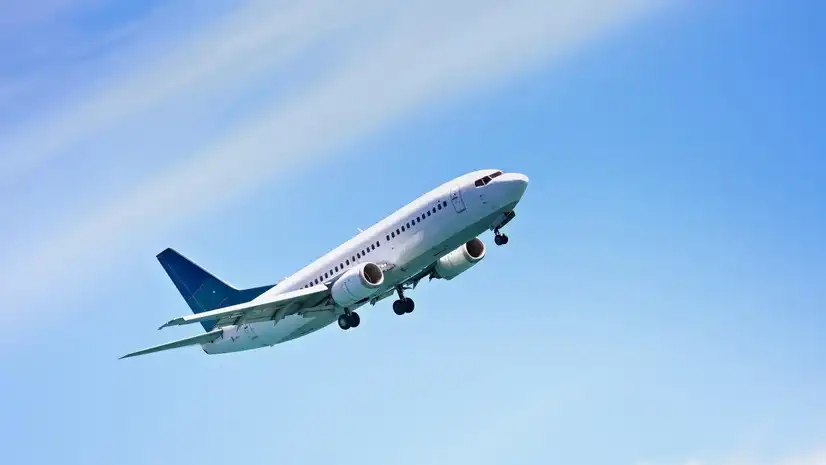
Introduction: Humanity’s Oldest Dream Takes Wing
For as long as humans have gazed skyward, we have dreamed of flight. From Icarus’ fateful wings to Leonardo da Vinci’s visionary sketches, the idea of breaking free from the earth’s pull has stirred the human spirit for millennia. Today, stepping onto a commercial jet feels so routine that we forget what a miracle it really is—a feat of science, imagination, and ambition that transformed the modern age and continues to shape our collective future.
From Myth to Mechanism: The Birth of Modern Flight
In the early 20th century, Orville and Wilbur Wright made the first controlled, powered flight, turning myth into reality on the windswept dunes of Kitty Hawk. Their modest contraption flew just 120 feet, but it ignited a technological revolution that would span continents and connect people like never before.
The decades that followed saw aircraft evolve from fragile wood-and-cloth biplanes to sleek metal airliners and supersonic jets. Each generation of engineers and aviators pushed the limits of speed, safety, and scale—ushering in the golden age of air travel and changing the way we work, trade, and explore.
Why Flight Matters: The Invisible Threads That Bind Us
Flight is not merely about moving people from point A to point B; it is the very bloodstream of globalization. Consider what aviation makes possible:
-
Cultural Exchange: Family reunions spanning continents, students studying abroad, artists performing worldwide.
-
Economic Growth: Millions of jobs created in aviation, tourism, trade, and supporting industries.
-
Humanitarian Aid: Disaster relief supplies, medical personnel, and vaccines reach remote regions within hours.
-
Scientific Discovery: Research aircraft study hurricanes, monitor climate change, and even ferry astronauts partway to space.
Without modern flight, much of the economic and cultural interconnectedness we now take for granted would simply unravel.
A Day in the Sky: The Quiet Drama of Flight
For the modern traveler, the experience of flight can be paradoxical. It is, at once, mundane and magical. We stand barefoot at security checks, sip stale coffee in departure lounges, shuffle down narrow aisles—and then, suddenly, we are soaring seven miles above the earth at 500 miles an hour, watching continents drift by beneath wispy clouds.
Within this airborne limbo, life assumes a different rhythm. Business travelers prepare presentations somewhere over the Atlantic. Children press noses to windows, mesmerized by tiny toy-like towns below. For a few fleeting hours, we all share a space suspended between departure and destination—alone yet together, earthbound yet skyborne.
The Science Behind the Wings
Modern aircraft are masterpieces of engineering. Each flight is made possible by an intricate ballet of physics, technology, and human skill.
Key elements include:
-
Aerodynamics: Wings shaped to generate lift while minimizing drag.
-
Propulsion: Jet engines that compress air, ignite fuel, and produce thrust powerful enough to carry hundreds of tons skyward.
-
Navigation: Sophisticated avionics systems guide pilots through storms, turbulence, and crowded airways with pinpoint accuracy.
-
Safety Protocols: Rigorous checks, redundancies, and trained crews ensure commercial aviation remains one of the safest forms of travel.
It is easy to forget the countless innovations packed into each flight—from carbon-fiber fuselages to fuel-efficient engines that have dramatically reduced emissions per passenger mile.
Flight and the Environment: A Delicate Balance
Despite these advances, aviation’s impact on the environment is a pressing concern. Aircraft account for roughly 2-3% of global carbon emissions—a figure that, without intervention, could rise as demand grows.
To address this, the industry is innovating boldly:
-
Biofuels: Airlines and researchers are developing sustainable aviation fuels derived from algae, waste oils, or agricultural residues.
-
Electric and Hybrid Aircraft: Start-ups and major manufacturers alike are racing to create electric planes for short-haul flights.
-
Operational Efficiency: Better air traffic management, lighter materials, and next-gen engines reduce fuel burn and noise pollution.
-
Offset Programs: Many travelers now choose to offset their flight emissions by funding reforestation or renewable energy projects.
Sustainable flight is no longer a futuristic dream—it is an urgent necessity and an opportunity to once again redefine the skies.
The Democratization of Flight: Barriers and Bridges
One of the greatest triumphs of modern aviation is its increasing accessibility. What was once a privilege of the wealthy is now within reach for students, families, and backpackers alike. Budget carriers, competitive markets, and global alliances have opened the skies to millions.
However, this democratization is not universal. In many regions, prohibitive costs, limited routes, or restrictive policies still keep flight out of reach for ordinary citizens. Bridging these gaps remains a key challenge—and a moral imperative—as we look to the future.
Flight’s Next Frontier: Where Do We Go from Here?
Flight is poised to evolve once more, spurred by innovation and necessity alike. Exciting frontiers include:
-
Supersonic Travel: New companies are reviving the dream of commercial supersonic jets, promising to cut transatlantic flight times in half.
-
Space Tourism: Companies like SpaceX and Blue Origin are blurring the lines between air travel and space exploration, offering civilians a glimpse of the cosmos.
-
Urban Air Mobility: Concepts for flying taxis and drone deliveries could reshape city transport, easing congestion and redefining the daily commute.
Each leap forward echoes the spirit of the Wright brothers—an unyielding belief that we can always fly higher, faster, and better.
Conclusion: Always Upward, Always Forward
To fly is to experience a rare blend of mastery and humility—mastery of the physical forces that bind us to the earth, and humility before the vastness that unfolds beneath our wings. Each takeoff is a reminder that human dreams, when paired with ingenuity and courage, can conquer the impossible.
In a world that feels, at times, divided by distance and difference, flight remains a beautiful contradiction: a marvel of modern technology that brings us closer together by lifting us high above our borders and boundaries.
So, next time you buckle your seatbelt and feel that sudden surge of the engines, pause for a moment. Look out the window at the clouds drifting by, and remember: what seems ordinary now was once only a dream—proof that the sky has never been the limit, but rather, an invitation.